Tameion

Agents Hackathon
In partnership with Circle & Arc

AI agents that spend a business's money. A builder series covering the treasury, invoices, contractors, subscriptions, and the audit trail behind all of it. Settled on Arc in USDC.

The word tameion is ancient Greek for a treasury, and literally for the room the money was kept in. In Byzantium that room grew out of the vestiarion, the emperor's wardrobe department, which stored silk and coins side by side and eventually took over minting money and paying the army. The name fits this event because the job is back in a new form: an AI agent managing a business's money on the owner's behalf.
Format
Online · 3 weeks
Dates
Jul 27 – Aug 17
Settlement
Arc · <500ms
Access
Invite-only
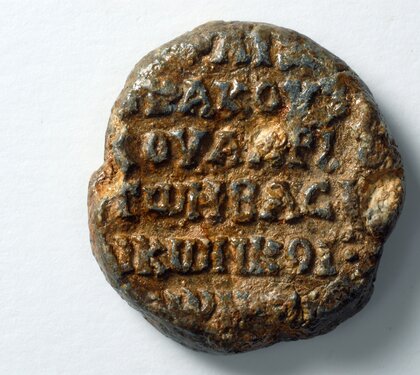
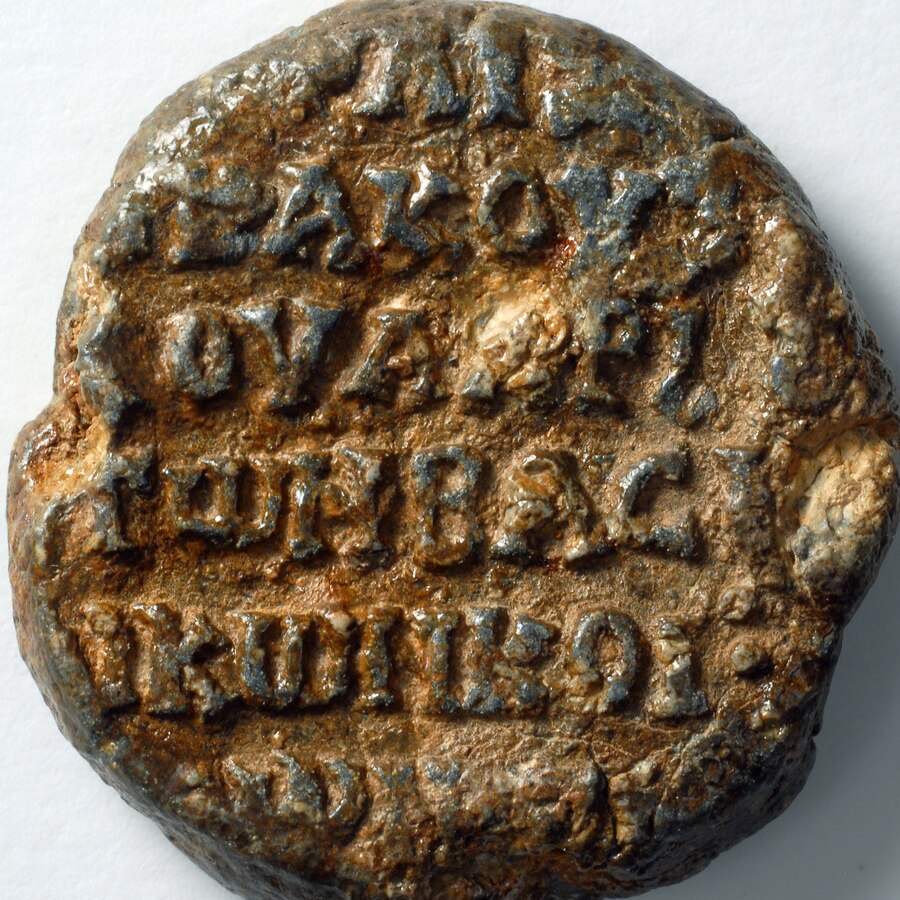
A Byzantine lead seal inscribed in Greek majuscule, naming a chartoularios of the imperial vestiarion
A treasurer's seal
Byzantium · ΤΑΜΕΙΟΝ · lead, 8th century
A chartoularios, or record-keeper, of the imperial vestiarion

Hosts
00

The Tameion Agents Hackathon is hosted by Canteen, a builder series for AI agents that hold, allocate, and disburse a business's money, settled on Arc, the stablecoin-native L1 from Circle. It is the third event in the series, after Agora and Lepton.

Canteen
Canteen
Host

A research and technology firm working at the intersection of crypto, AI, and payments. Hosts and curates the Tameion Agents Hackathon.

Circle
Circle (NYSE: CRCL)
Platform

A global financial technology firm building the most widely used stablecoin network. Issuer of USDC and EURC.

Arc
Arc
Settlement

The purpose-built L1 blockchain from Circle, designed for stablecoin payments. USDC gas and sub-second settlement make an AI-run treasury's constant small payments affordable.

Get
Started
01
00
Register on Luma (if you haven't already)
TBD · Luma link
Enter your GitHub handle and Discord handle accurately, since this is how we collate submissions.
01
Join the Canteen Discord
Drop in and say hello. Tell us who you are and what you're building. The Canteen team is around, and so are the other Arc builders.
02
Join the Arc builder Discord
Mention Canteen + Tameion in the onboarding flow. If you get rejected or have trouble joining, ping @kdrohan in the Canteen Discord.
03
Install the ARC CLI
uv tool install git+https://github.com/the-canteen-dev/ARC-cli
Includes RPC access to a Canteen-hosted Arc testnet, plus Arc repos and docs pre-bundled as agent context, so your coding agent can build against Arc out of the box.
04
Install the Circle CLI
npm install -g @circle-fin/cli
A unified interface for agent wallets, x402-compatible payments, and crosschain USDC transfers, straight from the command line. Requires Node.js v20.18.2+.
05
Read the Distribution Bootstrap
The hard part of a payments product was never the rail. It was finding the people. The Distribution Bootstrap for Payments Founders explains where those people already are. For this event the case is even stronger: the open-source accounting and ERP projects that real businesses already run on have never had a settlement layer, and almost none of their maintainers have ever touched crypto.
06
Submit your project: TBD · submission form
Deadline: August 17.
You will need: a public link to your GitHub repo and a short recorded video demo (keep it under 3 minutes). A live deployed link is optional but strongly encouraged. You will also be asked traction questions: how many businesses you have onboarded, how much value the agent moved, and what problems you are solving for them. You can submit as many times as you like before the deadline.
Overview
02

A business's money is never one balance. It is cash sitting in several accounts earning nothing, invoices owed out and owed in, contractors waiting on milestones, subscriptions renewing whether or not anyone opened the tool, and a compliance question hanging over every counterparty. Almost all of it is still decided by a person reading a spreadsheet on a Tuesday.

None of those decisions are hard because they are deep. They are hard because there are thousands of them, each one small, each one dependent on what the other thousand are doing. That is exactly the kind of work an AI agent is built for, and it has been out of reach because software had no way to actually hold and move the money.

Arc changes that. Fees are roughly $0.01 and paid in USDC rather than a volatile token, and settlement takes under half a second. CCTP and Gateway let an agent see and move funds across chains as one balance. That is enough for an AI agent to run the whole treasury: forecasting cash needs, timing payments, screening counterparties, and keeping a complete record of every decision it made.

Fees
~$0.01 per transaction, paid in USDC gas
Settlement
<500ms cross-chain, USDC gas on Arc
Awards
03
$50k across four tiers, paid in cash or equivalent
Grand Prizes
$40k TOTAL
  • 1st place: $10k · 1 team
  • 2nd place: $7.5k × 2 teams · $15k total
  • 3rd place: $5k × 3 teams · $15k total
Standout Teams
$7.5k TOTAL

10–12 teams demonstrating exceptional work, awarded in roughly equal shares (~$650–$750 per team). Not ranked within the cohort.

Feedback Incentives
$500 TOTAL

For developers who provide the most useful product feedback on Circle's developer tooling: friction points, product improvements, and developer-experience insights.

Easter Eggs
$2k TOTAL

Code-golf challenges, Discord puzzles, content challenges, and assorted side quests scattered throughout. Designed for explorers.

The
Stack
04

Circle's developer platform on Arc, the primitives suited to an agent that holds and disburses a company's money. Use what you need.

Embed secure wallets in any app, with automated key management.
Use case: a treasury wallet, departmental sub-wallets, and a wallet per contractor.
Let a transaction's fees be paid in USDC, or by someone other than the sender.
Use case: gasless internal transfers and vendor payments; the vendor never holds a gas token.
Transfer tokens between wallets on the same chain.
Use case: programmatic payouts to contractors and vendors, triggered by a milestone rather than a person.
Move USDC across blockchains.
Use case: treasury rebalancing between operating and reserve accounts that sit on different chains.
Exchange one token for another on the same chain.
Use case: convert to the vendor's preferred currency at payment time, USDC to EURC and back.
Native USDC transfer across chains by burn and mint, without a wrapped asset.
Use case: paying an international vendor or contractor who settles on a different chain than you do.
A unified USDC balance across chains, spendable instantly.
Use case: one honest view of what the company actually holds, which is the precondition for forecasting anything.
A yield-bearing token: a tokenized money market fund.
Use case: the reserve that earns while it waits. Move idle treasury in, redeem it when the forecast says cash is needed.
Build and manage smart contracts.
Use case: budget rules, approval thresholds, milestone escrow, and subscription logic that an agent cannot quietly exceed.
The leading digital dollar and digital euro.
Use case: native settlement on Arc, and paying a European vendor in the currency they invoice in.
Reference implementations · Arc sample apps

Open-source starting points: fork them, remix them, or use as scaffolding for your submission. Full index →

circlefin/arc-fintech: multichain treasury with crosschain capital movement and rebalancing. Start here for RFB 1.

circlefin/arc-escrow: escrow with AI-validated deliverables and release-or-refund logic. Start here for RFB 3.

circlefin/arc-multichain-wallet: unified USDC balance and crosschain transfers.

circlefin/arc-stablecoin-fx: USDC↔EURC FX swaps via the App Kit Swap SDK.

circlefin/arc-p2p-payments: seamless, gasless peer-to-peer payments on Arc.

circlefin/arc-commerce: USDC payments for credit purchases.

circlefin/arc-defi-lending-and-borrowing: DeFi lending, using cirBTC as collateral to borrow USDC.

App Kits · Multichain payment SDKs

A suite of SDKs for composing multichain payment and liquidity flows behind one type-safe interface, so you build against a single API instead of wiring up each protocol per chain. Install the all-in-one App Kit SDK, or pull in individual kits. Install guide →

Send: transfer tokens between wallets on the same blockchain.

Bridge: transfer USDC across blockchains.

Swap: exchange one token for another on the same blockchain.

Unified Balance: a chain-abstracted balance you can spend instantly.

Combine: chain multiple capabilities into one flow, e.g. crosschain swap (Bridge + Swap).

Requests
for Builders
05

RFBs, Requests for Builders, are our version of YC's Requests for Startups. Five open problems in running a business's money, each one a place where a person is currently doing by hand what an agent could do continuously. No single focus this round, and these aren't tracks. Build what you care about, or surprise us.

The problem. Businesses hold cash across multiple accounts and chains, often earning zero yield while missing the right moment to spend. How does an AI manage a treasury to maximize yield, forecast cash needs, and allocate funds across the company?

What the AI decides
  • Cash-flow forecasting, and what the forecast implies about runway
  • Fund allocation across accounts and legal entities
  • Working capital: when to deploy cash and when to preserve it
  • Yield: move idle funds into USYC, redeem when cash is needed
  • Budget warnings by department or project
  • Timing for large expenditures
What builders create
  • Multichain treasury dashboards with a unified balance view
  • Cash-flow forecasting models with runway alerts
  • Automated yield optimization with USYC
  • Budget monitoring and departmental allocation tools
Example builds
  • TreasuryAI: manages cash across accounts, forecasts runway, flags a change in burn rate, moves funds between operating and reserve, and earns yield on the reserve via USYC
Traction metrics
  • Businesses using the application · total funds under management
  • Cash-flow forecast accuracy
  • Treasury operations automated per week

The problem. Accounts payable and receivable mean manual invoice processing, payment-timing decisions, and collections follow-ups. It is tedious, error-prone, and a standing invitation to fraud. How does an AI run the full AP/AR cycle while improving cash flow?

What the AI decides
  • Reads invoices, emails, and contracts to work out what is actually owed
  • Optimizes vendor payment timing: an early-pay discount against preserving cash
  • Prioritizes collections based on how each customer has behaved before
  • Detects duplicate invoices and probable fraud
  • Screens a vendor's wallet address before paying it
  • Matches payments to invoices without a human doing the matching
What builders create
  • Invoice ingestion and parsing from email, PDF, or API
  • Payment-timing optimization engines
  • Payment workflows with address screening built into the path
  • Receivables collection with follow-ups timed to the customer
Example builds
  • PayablesAI: reads incoming invoices from email, validates each against the contract, screens the vendor address, schedules the payment for the right day, and executes it. Chases overdue receivables on its own schedule.
Traction metrics
  • Invoices processed · total payment volume
  • Days payable and days receivable outstanding, before and after
  • Duplicate invoices caught

The problem. Businesses work with dozens of contractors and vendors but have no systematic way to track performance, manage payment, or build reputation data. How does an AI manage those relationships, release milestone payments, and surface the right contractor for the next job?

What the AI decides
  • Payment scheduling against milestone completion
  • Reputation scoring from delivery and quality, not from a testimonial
  • Compliance screening at onboarding, before the first payment clears
  • Rate negotiation informed by what the market is actually paying
  • Vendor discovery and matching for a given need
  • Credit limits set by payment history
What builders create
  • Vendor onboarding flows with screening in the path
  • Milestone escrow and release systems
  • Reputation scoring and vendor ranking
  • Vendor discovery and matching marketplaces
Example builds
  • VendorAI: manages a network of contractors, screens each wallet at onboarding, releases milestone payments once work is verified, builds a reputation score from what happened, and suggests new vendors from the pattern
Traction metrics
  • Contractors and vendors managed · total payment volume
  • On-time payment rate
  • Vendor satisfaction

The problem. Companies waste 20–30% of software spend on unused licenses, redundant tools, and renewals nobody looked at. How does an AI watch usage, find the waste, and act on it before the contract rolls over?

What the AI decides
  • Which subscriptions are underused
  • When to open a negotiation, which is always before the renewal
  • Which tools are paying twice for the same job across two teams
  • Whether the contract should be monthly or annual
  • Where consolidation is worth the migration cost
What builders create
  • Usage monitoring and analytics across the software estate
  • A renewal calendar that prompts the negotiation in time
  • License utilization tracking per team
  • Redundancy detection and consolidation recommendations
Example builds
  • SpendAI: watches every subscription, flags unused licenses, cancels the tools nobody opens, negotiates the renewal rate, and finds where two teams are paying for the same functionality
Traction metrics
  • Subscription spend under management
  • Documented savings, cancelled or renegotiated
  • License utilization, before and after · redundant tools found

The problem. Compliance screening is typically binary and point-in-time: block or allow, checked once, at the transaction. Businesses need continuous monitoring, risk-tiered responses, and some visibility into indirect exposure. How does an AI make compliance an ongoing judgment rather than a gate?

What the AI decides
  • Transaction limits scaled to risk, rather than a single allow-or-block
  • When enhanced due diligence is warranted: PEP exposure, high-risk industry
  • How often an existing counterparty should be screened again
  • Which indirect exposures matter, when your vendor's vendor is the sanctioned one
  • Payment terms priced to the counterparty's risk profile
What builders create
  • Continuous counterparty monitoring
  • Risk-tiered transaction limit systems
  • Indirect exposure visualization across a vendor network
  • Audit-ready compliance reporting
Example builds
  • ComplianceAI: monitors every counterparty, alerts when a risk profile changes, adjusts credit limits against exposure, and generates reports a regulator would accept
  • RiskTier: dynamic transaction limits from live screening. Low risk gets full access, medium gets reduced limits, high requires a human
  • ExposureMap: second-degree sanctions exposure across your vendor and customer network, surfaced before it becomes your problem
Traction metrics
  • Addresses monitored · alerts generated and resolved
  • Risk events caught before the transaction
  • Compliance reports generated
Voices · on other people's money
"The same possessions are wealth to the man who knows how to use them, and not wealth to one who does not."
Xenophon Oikonomikos · c. 362 BCE // on the estate and its steward
"You ought to have deposited my money with the bankers, and on my return I should have received back my own with interest."
The Parable of the Talents Gospel of Matthew 25 // on idle capital, buried in the ground
"Give an account of thy stewardship; for thou mayest be no longer steward."
The Unjust Steward Gospel of Luke 16 // on the reckoning that follows
Prior
Art
06

Trusting someone else to spend your money is an old problem, and the inventions that made it workable are still recognizable in any modern finance department: the audit, the split tally, the public lien record, the standard measure. Each entry below pairs one of those inventions with the version an AI agent could run today, now that money itself is programmable.

A Byzantine lead seal, inscribed in Greek
The bulla · struck from a die only its holder possessed
The Lateran Palace in Rome
The Lateran · where the papal vestiarium kept the wardrobe and the accounts together
01
The official who had to explain the books
Every official faced an audit when his term ended, and could not leave the city until it cleared · the euthyna, Athens

An Athenian who handled public money went through the euthyna, literally the "setting straight," at the end of his term. The audit was annual because reading the accounts was slow. The hack: make the audit continuous instead. An AI agent with spending authority writes a signed, append-only record of every decision it makes, including the balance it saw, the forecast it ran, the rule it applied, and the payment it sent, so a reviewer can replay the agent's reasoning instead of reconstructing it from bank statements. beancount/beancount is a ledger an agent can write to and a human can read, and firefly-iii/firefly-iii already has the rules engine. Neither has ever been connected to money that actually moves.

Ties to RFB 1 · Intelligent Business Treasury and RFB 5 · Compliance Intelligence. If an AI agent is going to spend money without asking first, the record it produces afterwards is what makes it trustworthy.

02
Idle silver in the ground earns nothing
The servant who buried his master's money was the only one rebuked · the Parable of the Talents

The master's complaint in Matthew 25 is a treasury complaint: you ought to have deposited my money with the bankers, and I should have received my own with interest. Burying the silver looked safe, but it cost him the interest. The hack: an AI agent that notices idle balances and does something about them, moving reserves into USYC and redeeming them exactly when the cash-flow forecast says the money is needed. The hard part is not the yield, it is the timing: redeeming early enough that payroll clears, but late enough that the reserve had time to earn.

Ties to RFB 1 · Intelligent Business Treasury. Cash left sitting idle is losing yield, even if nobody chose to leave it there.

03
The tally broken in two, and matched later
Each party kept half; the agreement was real only when the halves fit · the symbolon

A symbolon was an object broken in two, with each party keeping half; fitting the halves back together proved the agreement was real. Accounts-payable clerks still perform the same match by hand: purchase order, goods received, invoice. The hack: make each half a signed digital artifact, so an AI agent can verify the match automatically and release the payment the moment everything lines up. invoice-x/invoice2data extracts the invoice, paperless-ngx holds the document, and OCA/account-invoicing has the workflow. What none of them have is the payment at the end.

Ties to RFB 2 · AP/AR Automation. Duplicate invoices and invoice fraud get through because the matching is still done by hand.

04
A stone in the field naming what is owed and to whom
The debt was public, cut into a marker anyone could walk up and read · the horoi of Attica

Athenians set horoi, boundary stones, on encumbered land, inscribed with the amount owed and the creditor's name. A lien registry you could read from the road, and one nobody could quietly amend. The hack: do the same for receivables. Publish the claim, not the counterparty's private books, so that credit limits can be set against what a business genuinely owes across all its creditors rather than what it discloses to each one separately. OCA/credit-control already models the dunning ladder; it has never been able to see past its own instance.

Ties to RFB 2 · AP/AR Automation and RFB 3 · Contractor & Vendor Network. Credit gets priced badly because each lender sees only its own slice of the borrower's debts.

05
Pay the crew before the day is out
A juror, a rower, a builder on the Acropolis: all paid the day they worked · the misthos

Athens paid the daily wage daily, because nobody working for two obols could afford to float a month of credit to the state. Net-30 payment terms exist because payments used to be expensive to make, not because anyone prefers them. The hack: contractor payment that follows the work instead of the calendar, released per verified milestone or even per day, using circlefin/arc-escrow for release logic and a source of truth like kimai/kimai or frappe/hrms for what was actually done. At a cent a transaction, paying a contractor forty times a month costs forty cents.

Ties to RFB 3 · Contractor & Vendor Network. A contractor waiting thirty days for payment is lending the business money at zero interest, and never agreed to.

06
Weighed against the public standard, not the seller's own cup
Officials kept the standard measures in the marketplace, and the seller's cup was checked against them · the agoranomoi

Every Greek market had officials who kept the standard weights and measures, because a seller who supplies both the goods and the measuring cup will eventually supply a smaller cup. Software billing has no such official: the vendor counts the seats and the API calls, and the invoice arrives already totaled. The hack: an AI agent that meters consumption independently, reconciles it against what was billed, and acts on the difference. It cancels the seats nobody opens, flags two teams paying for the same capability, and starts the renewal negotiation early. grokability/snipe-it knows who holds which license; getlago/lago and openmeterio/openmeter know how to meter.

Ties to RFB 4 · SaaS & Vendor Spend. Most companies never independently measure any of the things their software vendors bill them for.

07
A list read at the gate, and read again tomorrow
Athens barred the Megarians from its marketplace and its harbors · the Megarian Decree, Thucydides I.67

The oldest sanctions regime on record was an exclusion list enforced where the transaction happened. Because it was a static list, it was out of date the moment it was carved. The hack: continuous screening instead of a one-time gate. Self-host opensanctions/yente, re-screen every existing counterparty on a schedule, and use nomenklatura's entity resolution to check one hop further out, to the vendor's vendor. Then stop treating the result as a simple yes or no: a medium-risk counterparty gets a lower limit, not a refusal.

Ties to RFB 5 · Compliance Intelligence. Most businesses screen a counterparty once, at onboarding, and never look again.

08
The office that ran the whole cycle of money
The emperor's wardrobe grew into the department that minted coins, stored supplies, and paid the army · the vestiarion

The Byzantine vestiarion began as the room where the emperor's silk and coins were kept together, and grew into a single department that issued the currency, held the stores, and paid the army. The Circle stack covers the same three functions: Mint to issue, Gateway and USYC to hold, App Kit Send and CCTP to pay. The hack is the obvious one, and nobody has built it yet: a single AI agent that runs all three functions for a company.

Ties to RFB 1 · Intelligent Business Treasury. The lead seal pictured at the top of this page belonged to a record-keeper in that office.

How we
judge
07

We weigh agency and traction equally. Genuine usage matters even on a testnet: businesses actually using it, payments actually flowing in test USDC, and we want to see both. These weightings are recommendations. Judges have the final say, and the best projects tend to break the rules.

30%
Agentic Sophistication
How much does the AI actually decide versus just automate? An agent that chooses when to pay, and can explain why, beats a cron job with a language model bolted on.
30%
Traction
Genuine usage during the event window: real businesses, payments actually flowing in test USDC, volume you can point to. Invoices processed, contractors paid, funds under management. Great founders ship and get users in three weeks.
20%
Circle tool usage
Creative, effective use of the platform: Wallets, Paymaster, App Kit, CCTP, Gateway, USYC, Contracts, USDC and EURC.
20%
Innovation
Novel approaches, emergent behavior, research insight. New territory beats polished re-runs.
Final delivery

There is no live demo day. Judging is asynchronous: submit through the project form, and the judges review on their own time after the deadline. You can submit as many times as you like, so submit early and often.

Video demo · required
A recorded walkthrough on Loom, YouTube, or Vimeo. Keep it under 3 minutes.
Live product link · encouraged
A working URL judges can use hands-on. Optional, but strongly encouraged.

Plus a public GitHub repo, which is required. Judges read the repo directly and work hands-on with your live product where one is provided. Build for a reviewer who will click around without you in the room.

From
our friends
08

A team building alongside us. Use them while you're shipping, and tell them we sent you.

FAQ
09

The short version: build whatever you want, as long as it runs on Arc, you actually care about it, and a real business is already using it. It's a testnet, so the payments are test USDC, but the usage should be genuine. Building is the easy part now. What matters is whether the project keeps going after the event, and for the teams that do, we keep going too: funding, grants, and partnership support afterwards.

Whatever you want. The field is open, and the five RFBs and prior-art ideas are prompts, not tracks. What we're looking for comes down to three things, and they matter in this order:

  • It runs on Arc, with payments actually flowing in testnet USDC on the Circle Agent Stack.
  • It's something you genuinely care about and intend to keep building after the three weeks are up, not a demo you'll abandon the day after the deadline.
  • It's already in front of a business that uses it, solving a problem they actually have.

We weigh agency and traction equally. Genuine usage matters even on a testnet. We want to see both.

No. The RFBs and the prior-art section exist to get you started, not to box you in. There's no favored RFB this round: treasury, AP/AR, vendors, spend, and compliance are all equally open, and a build that cuts across several of them is closer to what a real finance function looks like anyway. If you surprise us with something better, that wins. As the judging note says, judges have the final say and the best projects tend to break the rules.

You need someone with real money problems, and they don't have to be large. A freelancer chasing three invoices, a two-person agency paying contractors abroad, a small studio with an unused seat on six SaaS tools: all of these are the traction we mean. Your own company counts, and so does the open-source project you maintain that has never had a way to take money in.

What doesn't count is a synthetic dataset. If nobody's actual money is on the other side of the decision, the agent isn't being tested.

This is the interesting design question of the whole event, and we don't have a fixed answer. An agent that asks permission for every payment is a form with extra steps. An agent that can move the entire treasury on its own judgment is not something anyone will run.

The good answers so far put the limit somewhere the agent cannot reach: a contract that enforces the budget rather than a prompt that requests it, a threshold above which a human signs, a complete record it must produce afterwards. Delegated authority has always worked this way: the person trusted with the money spends it freely, and every transaction is reviewed afterwards. The same rule works for an AI agent.

Unlike most hackathons, the prize isn't the finish line for us. If you're serious about building a real thing after the deadline, we commit for the long run alongside you. We have follow-on support for teams that keep going:

  • Funding to take the project beyond the prototype.
  • Grant support to keep building while you find traction.
  • Partnership support across Canteen, Circle, and the Arc ecosystem: distribution, introductions, and a path to real users.

The three weeks are how we meet you. What we're really looking for is the small handful of teams we'll still be backing a year from now. If that's you, tell us in your submission and find us in the Canteen Discord.

Yes. If you've already started something (at a prior hackathon, as a side project, or as an open-source accounting tool you've maintained for years), you're welcome to carry it forward here. That's exactly the kind of long-run building we're after. But we judge the delta, not the whole project: what you shipped and who you reached during Tameion. Where was the product and how many users did it have when Tameion began, and where are both at the end?

That gap is what's eligible for prizes, on both fronts equally: product and traction. New features built and new businesses onboarded during the program count; work that already existed when you started doesn't. So tell us where you left off, and show us how much further you've taken it.

Apply
10

Give the agent
the keys.

Three weeks, five RFBs, a company's money settled on Arc in testnet USDC. If you build the tools businesses already keep their books in, we'd like you here.